
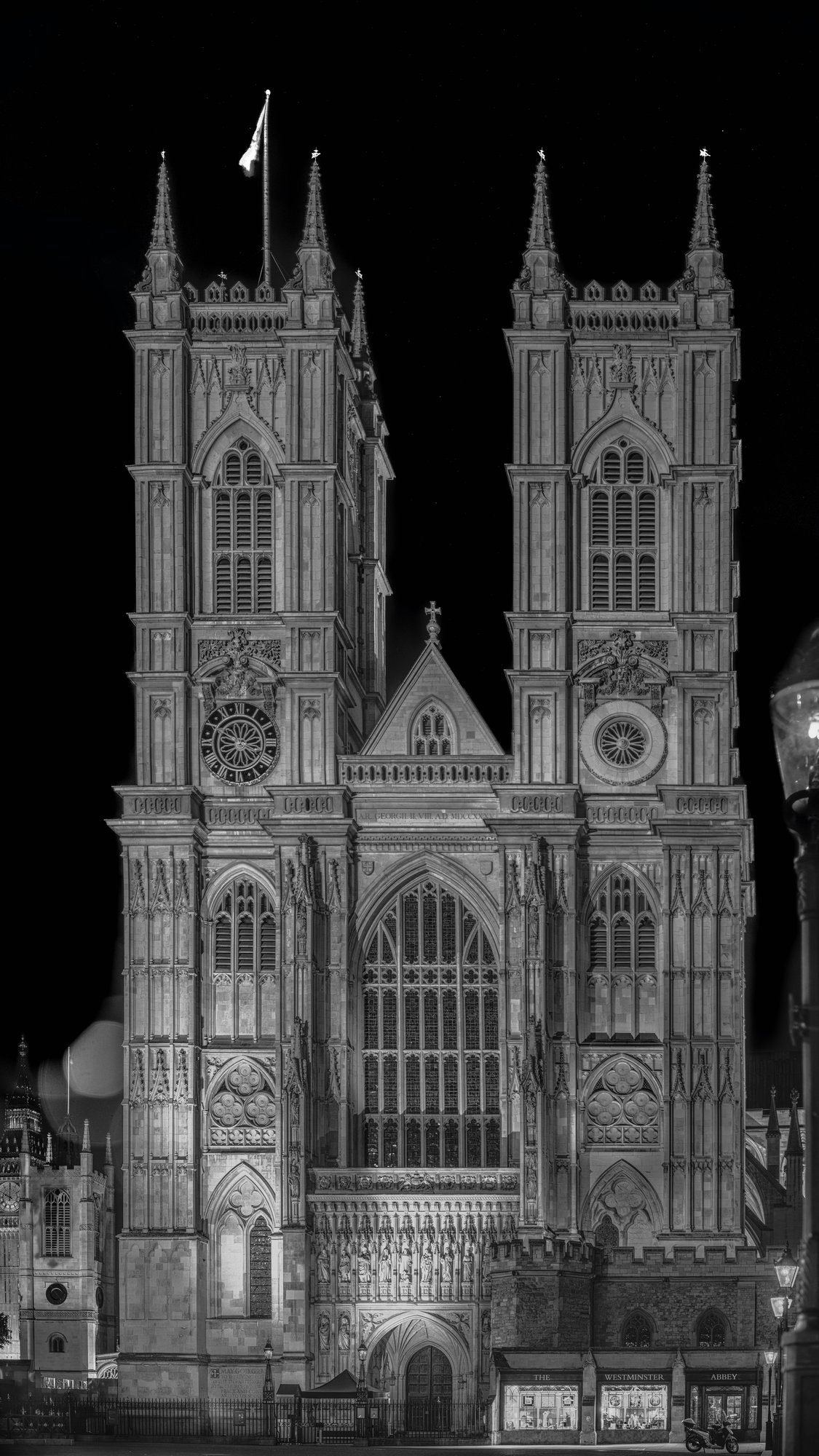
Westminster Abbey
- sacred
- Price: £27 - £30
- Opening hours: 09:30-15:30 Mon-Sat (closed Sun to visitors, services only)
History
A place of Christian worship has stood on this site, once known as Thorney Island beside the Thames, since at least the 10th century, but the soaring Gothic church visitors see today largely dates from a rebuilding begun by Henry III in 1245, who tore down most of the earlier Norman abbey to create a shrine worthy of Edward the Confessor and, not incidentally, of the Plantagenet monarchy itself. The result, with its ribbed vaults, flying buttresses and unusually tall Gothic proportions for England, remains one of the finest examples of medieval church architecture in the country.
Westminster Abbey's central role, though, has always been royal rather than purely religious: every coronation of an English or British monarch since William the Conqueror in 1066 has taken place within its walls, the Coronation Chair still standing at the heart of the church where sovereigns have been crowned for nearly a thousand years. The abbey has hosted royal weddings too, most recently that of Prince William and Catherine Middleton in 2011, continuing a tradition that stretches back through centuries of state occasions.
Did you know?
Beyond its royal ceremonies, the abbey functions as one of the most extraordinary mausoleums anywhere in the world: kings and queens are buried and memorialised alongside statesmen, scientists and explorers, all under the same Gothic vaults. In Poets' Corner, one of the densest concentrations of literary history anywhere, memorials and graves honour writers from Geoffrey Chaucer to Charles Dickens, a tradition that grew almost by accident after Chaucer's burial there in 1400 and has continued to draw new names ever since.
Away from the main nave, the abbey's cloisters, its octagonal Chapter House and the fan-vaulted Henry VII Lady Chapel add further layers of medieval and Tudor craftsmanship that many visitors rush past on their way to the coronation sites. The Lady Chapel's ceiling, completed in the early 16th century, is considered one of the supreme achievements of English Gothic architecture, its stone carved into a web of hanging pendants and tracery.
Good to know
Unlike most of London's major sights, Westminster Abbey closes entirely to sightseeing visitors on Sundays, reverting purely to its role as a working church with services open to worshippers only — a detail that catches out a fair number of visitors who assume, reasonably enough, that a famous landmark stays open every day. Plan a weekday or Saturday visit instead, and check the current opening hours before travelling, since they can vary around services and state occasions.
Given how much history is packed into a relatively compact building, an audio guide is well worth the small additional cost, helping to make sense of the tombs, chapels and memorials layered across nearly a thousand years rather than reading every plaque in person. The abbey is genuinely popular year-round, so booking tickets online in advance is strongly recommended over turning up and queueing at the door.