
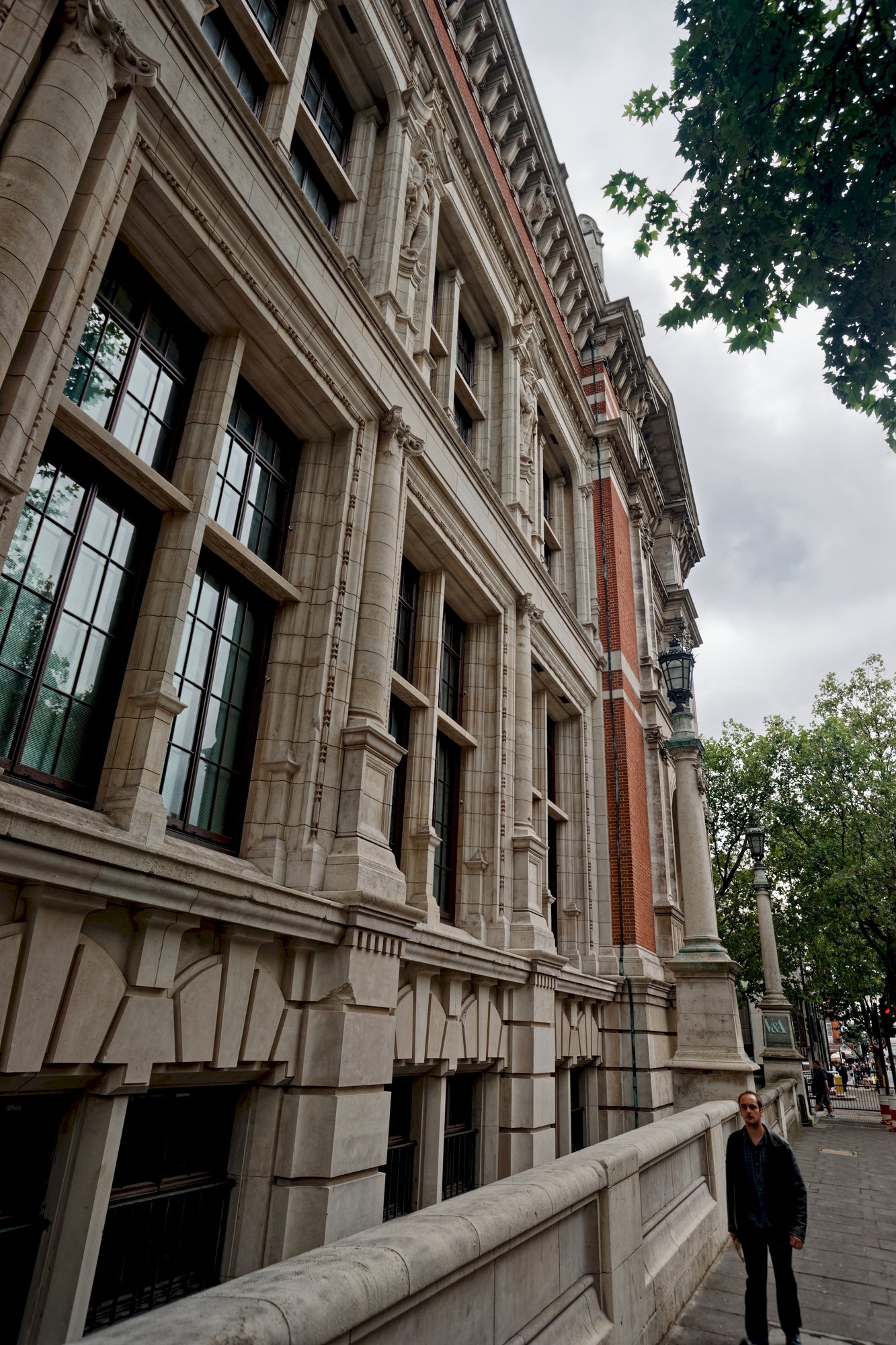
V&A Museum
- art-museum
- Price: Free (charge for special exhibitions)
- Opening hours: 10:00-17:45 daily, until 22:00 Fri
History
The V&A was founded in 1852, in the direct aftermath of the Great Exhibition of 1851, whose profits helped fund it — but its purpose from the very beginning was different from that of a typical art museum. Rather than simply collecting fine art for its own sake, the museum was explicitly conceived as a tool to raise the standard of British design and manufacturing, putting the finest examples of decorative art, craftsmanship and industrial production on public display so that designers, manufacturers and the wider public could learn from them directly.
That founding mission shaped the scope of the collection from the outset, and the V&A grew into the world's largest museum devoted to applied and decorative arts, spanning more than 5,000 years of human creativity across roughly 2.3 million objects — from Raphael's Renaissance cartoons and a full-scale plaster cast of Trajan's Column to ceramics, glass, furniture, jewellery, photography and one of the finest costume collections anywhere, tracing fashion from historic court dress to contemporary catwalk pieces.
Did you know?
Among the museum's most theatrical spaces are the Cast Courts, two soaring galleries filled not with originals but with plaster and metal reproductions of major European sculpture and architecture, including that full-scale cast of Trajan's Column, sliced in two to fit under the roof. They were assembled in the Victorian era specifically for students, artists and members of the public who had no realistic way of travelling to Rome, Florence or elsewhere to see the originals in person, and they remain fascinating today both as an art-historical curiosity and as a record of what conservation and access looked like before mass travel and photography.
The museum's own building is part of the collection in spirit if not in name: its ornate façade and richly tiled refreshment rooms, designed with contributions from William Morris and other leading Victorian designers, are considered among the very first museum cafés anywhere in the world, opened decades before the idea of feeding visitors on-site became standard museum practice.
Good to know
General admission to the V&A has been free since its founding, in keeping with the museum's original mission of open public access to good design, and it remains free today for the permanent collection — a rarity among museums of this scale anywhere in the world. Only the major temporary exhibitions, typically blockbuster shows on fashion, design or a single influential designer, carry a separate ticket.
Those ticketed exhibitions are genuinely popular and regularly sell out weeks or months in advance, so it's worth booking online as early as possible if there is a specific show on your list rather than assuming you can buy on the day. The museum also keeps extended hours until 22:00 on Fridays, a good option for a quieter, later visit outside the daytime crowds.