
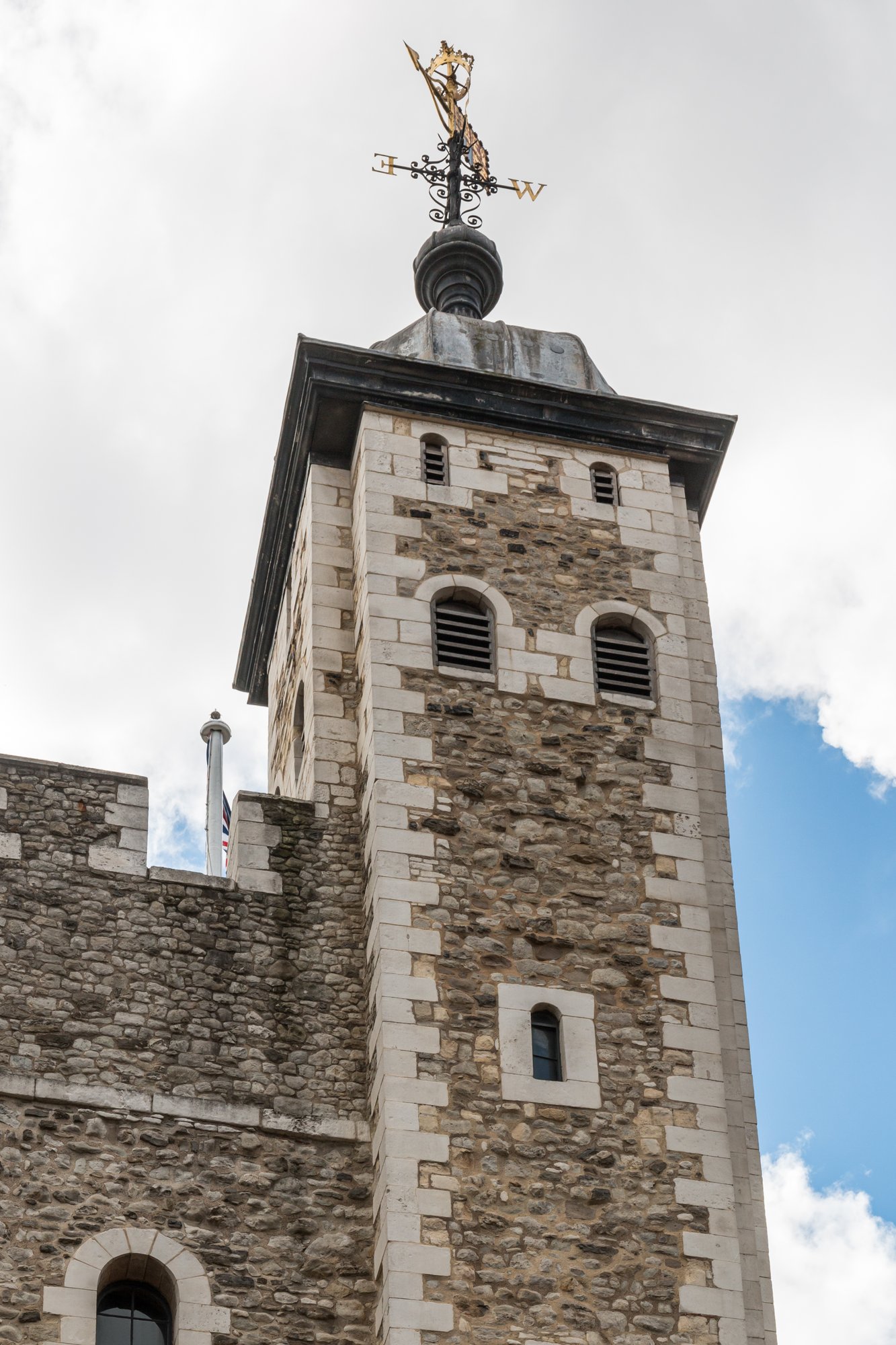
Tower of London
- castle
- Price: £29.90 - £34.80
- Opening hours: 09:00-17:30 Tue-Sat, 10:00-17:30 Sun-Mon (closed 24-26 Dec)
History
William the Conqueror ordered work on the White Tower to begin around 1078, a stark, unmistakable statement of Norman power raised on the north bank of the Thames barely a decade after the Conquest, intended to keep a newly conquered and still restless city in check. Over the following centuries, successive monarchs expanded the original keep into a sprawling concentric fortress ringed by curtain walls and a wide moat, and the Tower came to serve almost every function a medieval and early modern state required: royal palace, armoury, treasury, mint, and repository of state records.
The Tower's most infamous role, however, was as a prison and place of execution. Anne Boleyn, second wife of Henry VIII, was beheaded within its walls in 1536 on charges of treason, and she was not alone: other queens, nobles and political prisoners met their end here over the centuries, their fates now recounted plainly rather than for spectacle by the guides who lead visitors through the same grounds. Today the Tower is a UNESCO World Heritage Site, valued as one of Europe's most complete surviving examples of Norman military architecture and nine centuries of continuous royal history.
The Crown Jewels
Since the 17th century, the Tower has been entrusted with the Crown Jewels, a working collection of coronation regalia still used in ceremonies today rather than a museum piece kept purely for display. Their history has a violent gap in it: after the execution of Charles I in 1649, the Commonwealth government had the medieval regalia broken up and melted down, so almost everything on display now dates from the restoration of the monarchy in 1660 onward, remade for the coronation of Charles II. Centrepiece of the collection is the Imperial State Crown, set with over 2,800 diamonds along with sapphires, emeralds and pearls, worn by the monarch only on the most formal state occasions.
The Jewel House where the regalia are kept is guarded around the clock, and visitors file past the crowns, sceptres and orbs on a slow-moving walkway designed to keep the queue flowing during busy periods. It is worth timing a visit for earlier in the day, since the Jewel House draws the longest queues of anywhere in the Tower and can otherwise eat heavily into the time available for the rest of the fortress.
Did you know?
The Tower's resident ravens are protected by one of London's most enduring superstitions: legend holds that if the ravens ever leave the Tower, the fortress will fall and disaster will befall the kingdom. Whether or not anyone truly believes it, the tradition is taken seriously enough that a small number of ravens are kept at the Tower at all times, cared for by a dedicated Ravenmaster, with their wings lightly trimmed so they never stray far from the grounds.
The Tower's guides, the Yeoman Warders, are universally nicknamed "Beefeaters" and have guarded the fortress since at least the 15th century; today they and their families still live within the walls, and their free guided tours are famous for weaving grim history and gallows humour into a single, memorably theatrical hour. Centuries earlier, the Tower kept a very different kind of resident: a royal menagerie that at various times held lions, an elephant, and even a polar bear gifted by the King of Norway, reportedly let out on a long chain to fish for salmon in the Thames.
Good to know
Given its scale, the Tower comfortably fills half a day, and trying to rush through the Crown Jewels, the White Tower, the battlements and the medieval palace rooms in less risks seeing very little properly. The free Yeoman Warder tours, included with every admission ticket and running at regular intervals throughout the day, are the single best way to get your bearings and hear the fortress's history first-hand — arrive early enough to catch one near the start of your visit.
Tickets are best booked online in advance, particularly in the summer high season when queues at the gate can be long and popular time slots sell out; booking ahead also tends to be cheaper than paying on the day. The Tower is closed on 24, 25 and 26 December, and opening hours differ slightly between Tuesday–Saturday and Sunday–Monday, so it's worth checking the current times before setting off.