
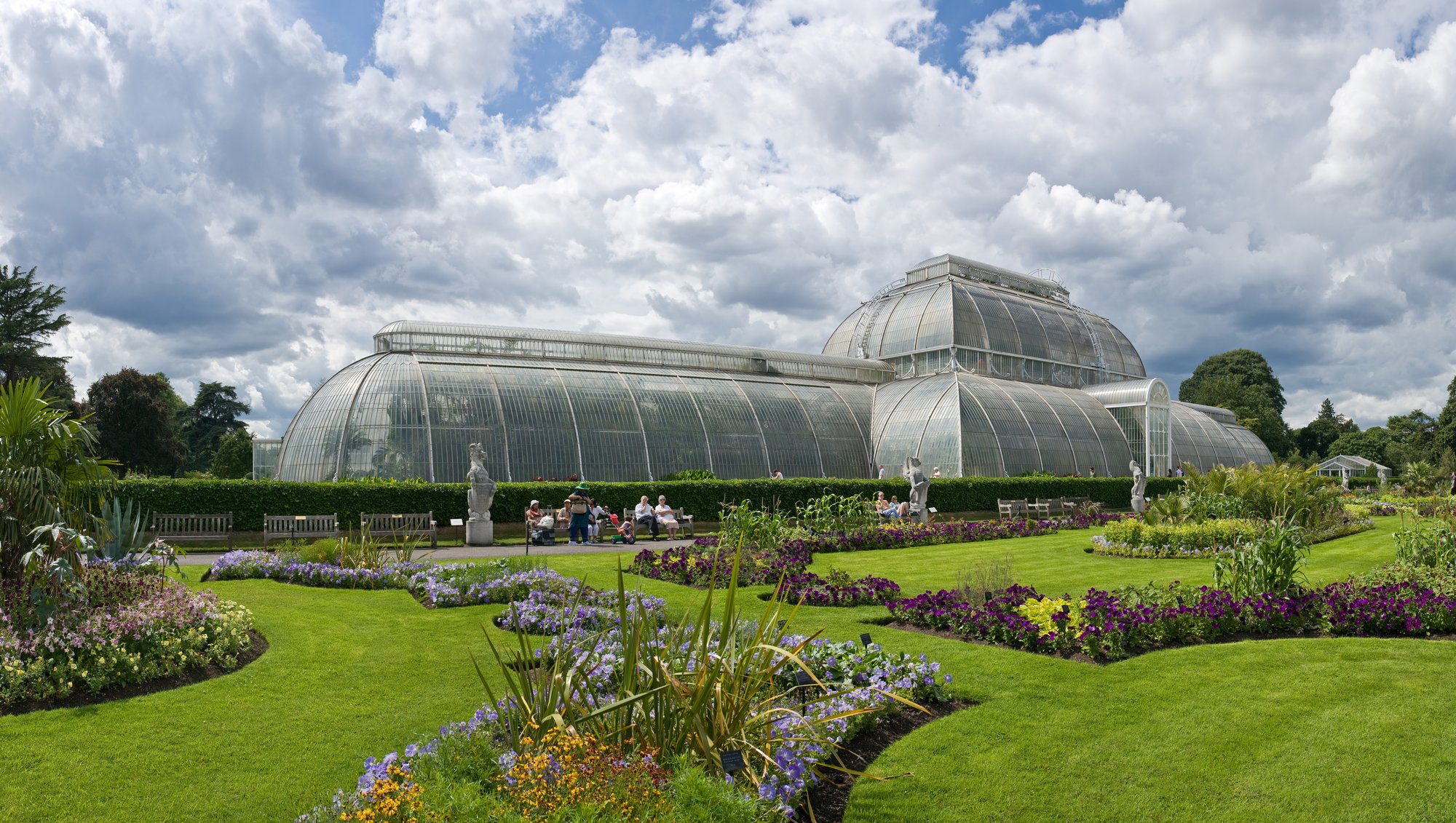
Kew Gardens (Royal Botanic Gardens)
- park
- Price: £16 - £22
- Opening hours: 10:00 - 18:00 daily (shorter in winter)
History
Kew's story begins in 1759, when Princess Augusta, mother of the future George III, set aside nine acres of the grounds at Kew to grow her personal collection of exotic plants. Over the following two centuries that modest botanical garden expanded, through royal patronage and the collecting expeditions of Victorian plant hunters, into the world's foremost centre of botanical science, a status recognised in 2003 when UNESCO inscribed Kew as a World Heritage Site.
Its architectural centrepiece is the Palm House, a curving cathedral of glass and wrought iron raised by the architect Decimus Burton between 1844 and 1848. It was designed specifically to recreate the humid warmth of the tropics, sheltering palms and other exotic species gathered from across the British Empire, and its interior remains thick with dense, dripping greenery to this day, largely unchanged since the Victorian age.
Did you know?
Rising above the treeline near the Palm House is the Great Pagoda, a ten-storey octagonal tower designed by the architect William Chambers and completed in 1762 for Princess Augusta, inspired by the pagodas Chambers had seen on his travels in China. Nearby stands the more modest, red-brick Kew Palace, the smallest of Britain's royal palaces and once a retreat for George III, whose Tudor-era rooms have survived largely untouched by later renovation.
For a different perspective on the gardens, a treetop walkway lifts visitors up among the crowns of ancient oaks, roughly level with the birds and squirrels that call them home. Below ground, and largely out of public view, the Millennium Seed Bank pursues a quieter but no less remarkable mission, storing billions of seeds gathered from plant species around the world as insurance against extinction.
Good to know
Kew's grounds cover 132 hectares, more than enough to fill an entire day without repeating a single path, so it's worth arriving early and pacing the visit rather than trying to see everything on a tight schedule. What's in bloom changes constantly through the seasons, from spring bulbs to summer borders to the autumn colour of the arboretum, so no two visits look quite the same.
The gardens run right down to the Thames, and a picnic on the riverbank makes a relaxed way to break up a long day of walking. Entry is ticketed, with prices varying by season, and the site is open daily year-round, though hours shorten considerably over the winter months.