
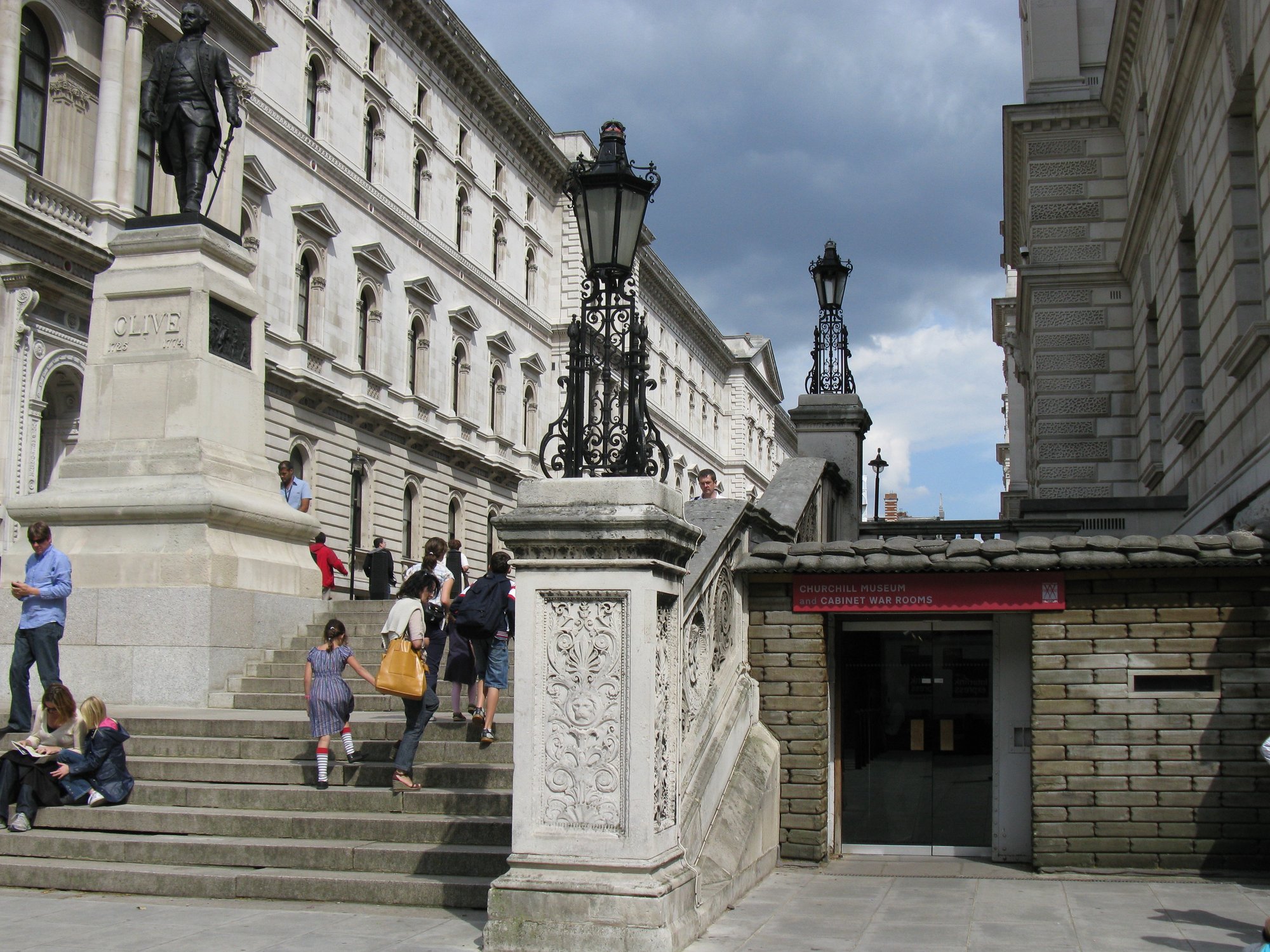
Churchill War Rooms
- museum
- Price: £27 - £32
- Opening hours: 09:30 - 18:00 daily
History
Beneath the Treasury building in Whitehall lies a low-ceilinged warren of reinforced rooms that served as the nerve centre of Britain's war effort from 1939 until victory in 1945. Here Winston Churchill and his War Cabinet met under bombardment, planning the country's response to the Blitz and the wider war from a bunker built to survive a direct hit, while just yards away clerks, typists and military planners worked round the clock in cramped, windowless offices to keep the machinery of government running.
Churchill himself made several of his wartime broadcasts from a small room fitted out with a scrambler telephone that linked him directly to President Roosevelt in Washington, a piece of secret communications equipment disguised for decades as an ordinary toilet to keep its true purpose hidden even from most staff who worked in the complex.
A Room Frozen in Time
When the lights were switched off on the day Japan surrendered in August 1945, the rooms were simply locked up and largely forgotten, their contents left exactly as they stood at the moment the war ended. That accidental neglect is precisely why they survive today in such extraordinary condition: sugar cubes still sit in desk drawers, pencils lie where they were dropped, and pins still mark troop positions on wall maps exactly as they were plotted in 1945.
The Map Room in particular, manned continuously for the entire war without a single day's break, kept a real-time picture of the conflict tracked in coloured pins and chalk annotations, including the desperate ebb and flow of the Battle of the Atlantic on which Britain's survival depended. Walking through it today feels less like visiting a museum reconstruction than stepping directly into a single, suspended moment from 1945.
Good to know
The Imperial War Museums opened the complex to the public in 1984 and later added the Churchill Museum, an immersive biographical exhibition tracing his life from soldier and journalist to the wartime leader whose speeches and defiance are inseparable from these very corridors. Allow at least two hours to do the site justice, and pick up the included audio guide, which fills in essential context that the low-lit, unlabelled original rooms don't provide on their own.
The rooms lie underground with no natural light and can feel close and warm with visitors, so dress in light layers even on a cold day outside. Given its popularity, especially with school groups and history enthusiasts, booking a timed ticket in advance is worth doing rather than risking a queue at the door.