
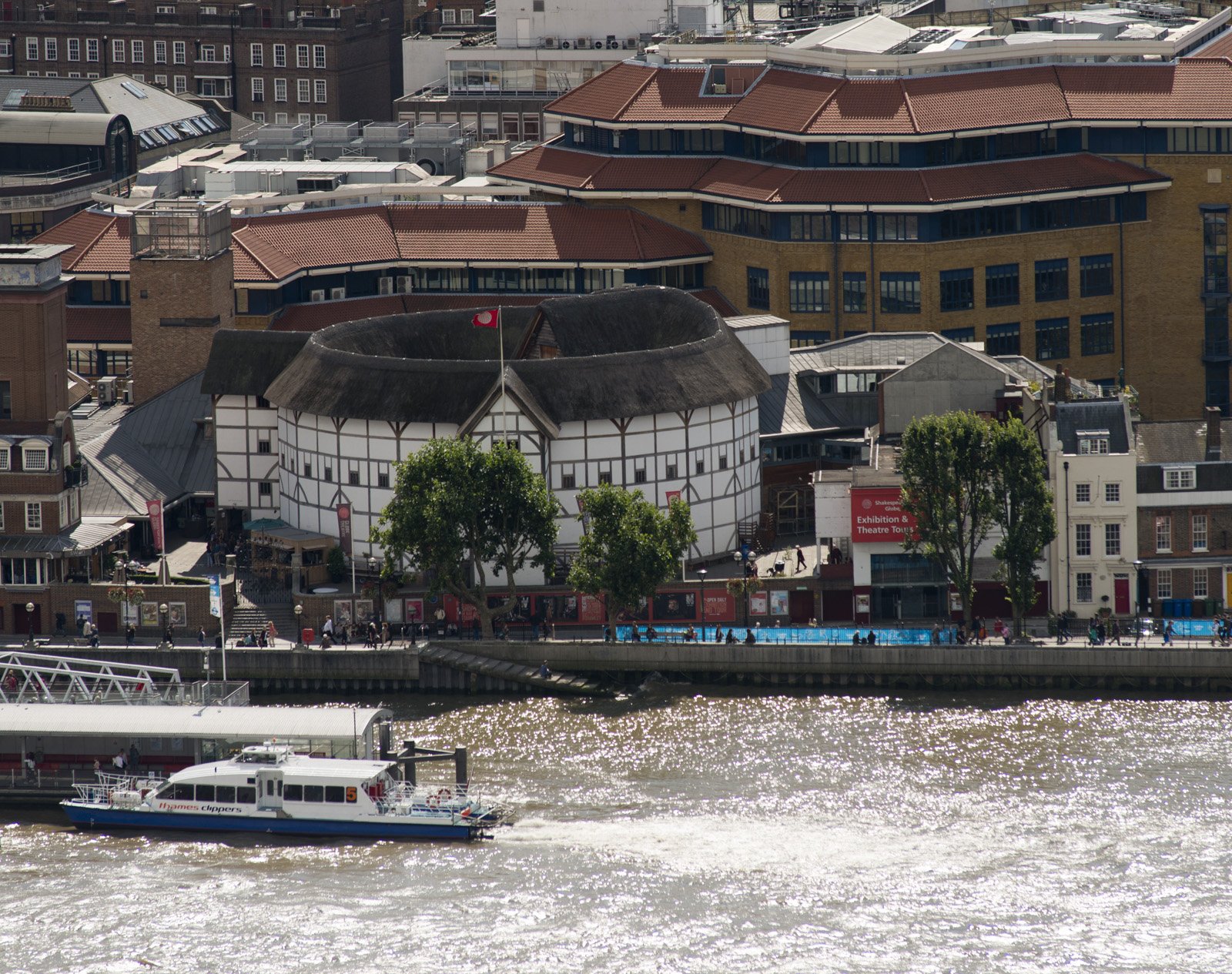
Shakespeare's Globe
- theatre
- historic
- Price: £27 - £59 (performances); £17 - £19 exhibition tour
- Opening hours: Exhibition 09:00 - 17:00; performance schedule seasonal (Apr-Oct)
History
The original Globe was built in 1599 by Shakespeare's own theatre company, the Lord Chamberlain's Men, reputedly using timbers salvaged from The Theatre, an earlier Shoreditch playhouse they had dismantled and carried across the Thames plank by plank. It stood for only fourteen years: in 1613, a cannon fired for dramatic effect during a performance of Henry VIII set the thatched roof alight, and the whole building burned to the ground within an hour — a fittingly theatrical end for a theatre, if not exactly the plan.
The Globe standing on Bankside today is a painstaking reconstruction close to the original site, completed in 1997 after two decades of campaigning by the American actor and director Sam Wanamaker. Wanamaker first visited the site of the original Globe in the 1940s and spent much of the rest of his life raising funds and support for its rebuilding, but died in 1993, four years before the theatre he had championed finally opened its doors.
Did you know?
The reconstruction was built using the same materials and methods as the Elizabethan original wherever possible: green oak timber frames jointed by hand, lime plaster walls, and a thatched roof made of water reed. That roof makes the Globe genuinely unusual in modern London — it's the only thatched building permitted in the city since the Great Fire of 1666, granted a special exemption (and a concealed sprinkler system) in recognition of its historical importance.
Performances take place with no artificial lighting or amplification, exactly as they would have in Shakespeare's day, relying entirely on daylight and the actors' own voices to fill the open-air yard. Standing in that yard, for a few pounds, are the "groundlings" — audience members who watch the whole play on their feet, open to the sky, just as they did more than four centuries ago.
Good to know
Because the theatre depends on natural daylight, seasonal productions run only from April to October; outside that window there are simply no performances to see. A year-round exhibition beneath the theatre stays open regardless of season, exploring Shakespeare's London and the practical craft of staging his plays without modern lighting or sound.
Standing tickets in the yard are the cheapest way to see a performance, but they come with a catch: there's no roof over your head, so a sudden shower means getting properly rained on. Check the forecast and bring a poncho if there's any doubt, or pay a bit more for a seat under cover in the surrounding galleries.